
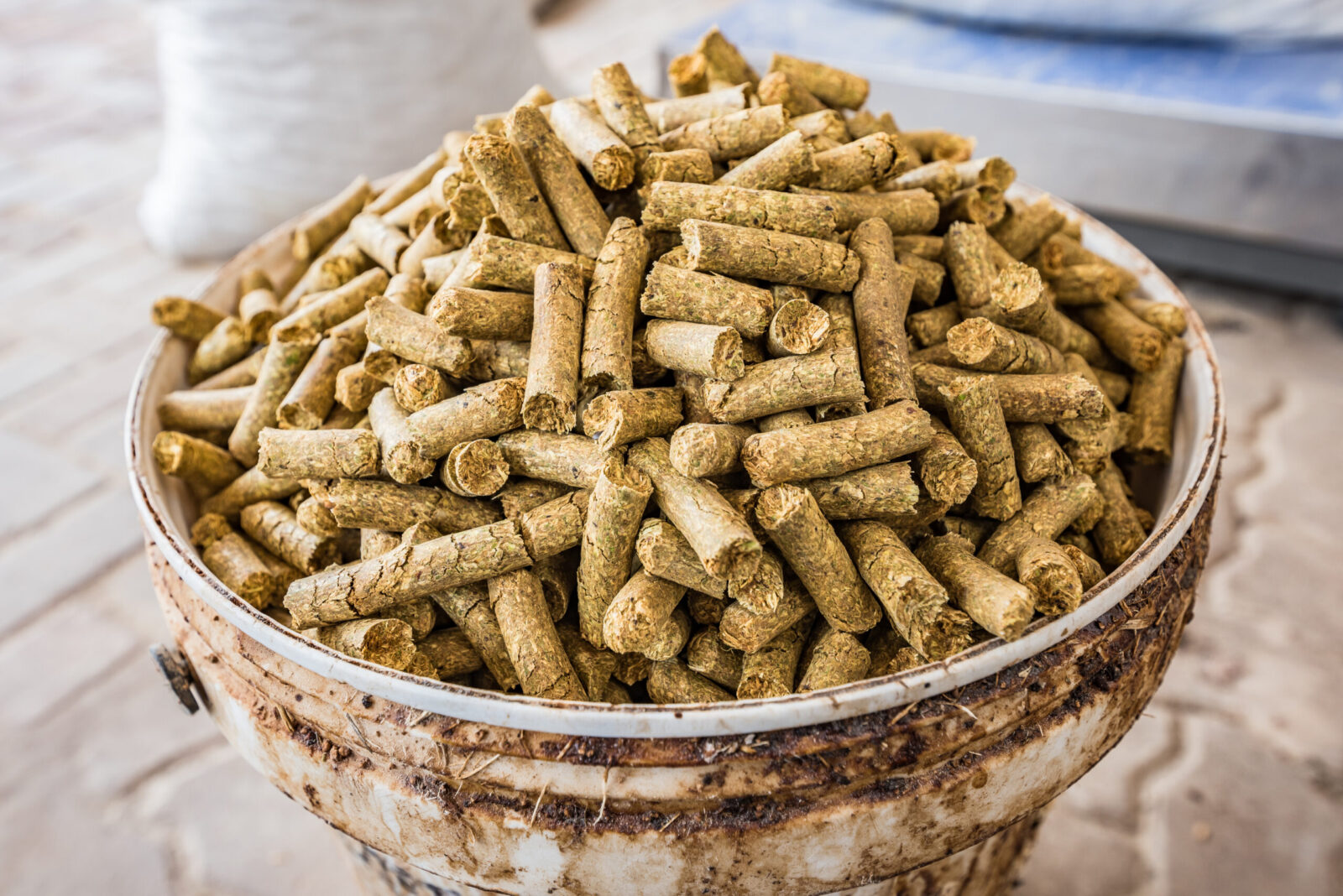
In animal feed manufacturing, consistency matters. While nutrition, formulation, and ingredient quality are critical, the physical characteristics of the finished feed can also have a significant impact on processing efficiency, animal performance, and overall feed quality.
One of the most important factors is particle uniformity.
Why Particle Size Matters in Animal Feed
Feed ingredients come in a variety of sizes and physical forms. Grinding these ingredients to a consistent particle size helps create a more uniform finished feed and allows ingredients to be mixed more effectively.
Particle size can influence:
- Feed mixing and ingredient distribution
- Digestibility and nutrient availability
- Pellet quality
- Feed conversion
- Material handling and flowability
- Processing efficiency
The ideal particle size varies depending on the animal species, feed formulation, and downstream process. Poultry, swine, cattle, and pet food applications may each have different requirements.
The goal isn’t necessarily to produce the smallest possible particle. The goal is to produce the right particle size as consistently and efficiently as possible.
How Hammer Mills Help Improve Particle Uniformity
Hammer mills are widely used in feed manufacturing because they can efficiently reduce a broad range of ingredients to a controlled particle size.
Inside the hammer mill, rotating hammers impact the material and reduce it against the breaker plate and screen. Once particles are small enough to pass through the screen openings, they exit the grinding chamber.
This process allows manufacturers to control the finished particle size by selecting the appropriate screen configuration and operating conditions.
The Importance of the Right Screen
Screen selection plays a major role in particle size control.
Generally, smaller screen openings produce a finer grind, while larger openings allow larger particles to pass through. However, screen selection isn’t simply a matter of choosing the smallest opening possible.
An excessively fine grind can increase energy consumption and reduce throughput without providing a meaningful benefit to the finished feed.
The right screen balances particle size, capacity, energy efficiency, and the requirements of the final product.
Uniformity Starts With Consistent Grinding
Particle uniformity depends on more than screen size alone.
Hammer condition, rotor speed, mill design, feed rate, and material characteristics can all affect grinding performance. Worn hammers, inconsistent feeding, or an improperly configured mill can contribute to variations in the finished product.
Regular maintenance and proper mill operation help maintain consistent grinding performance over time.
This is particularly important in high-volume feed manufacturing environments, where even small variations can add up across thousands of tons of production.
Particle Uniformity and Pellet Quality
Grinding is also an important step in the pelletizing process.
Consistent particle size allows ingredients to mix more uniformly and can contribute to more consistent pellet formation. When particles are excessively large or inconsistent, they can affect pellet durability, density, and overall quality.
Proper grinding can therefore help create a more consistent feedstock for the pelleting process.
Finding the Right Balance
The ideal grinding strategy depends on the specific feed application.
A feed manufacturer should consider:
- Target particle size
- Required particle-size distribution
- Feed formulation
- Animal species
- Desired production rate
- Energy consumption
- Pellet quality requirements
- Equipment configuration and maintenance
The objective is to find the right balance between particle uniformity, production efficiency, and operating cost.
Consistent Grinding Starts With the Right Equipment
Particle uniformity doesn’t happen by accident. It begins with properly selected and maintained size reduction equipment.
CSE Bliss hammer mills are engineered for demanding feed manufacturing applications, providing the performance and control needed to produce consistent ground material across a range of feed formulations.
By matching hammer mill configuration, screen selection, and operating conditions to the application, feed manufacturers can improve consistency throughout the production process, from grinding to mixing to pelleting.
Looking to improve grinding consistency in your feed operation? Contact CSE Bliss to discuss your application and particle-size requirements.