
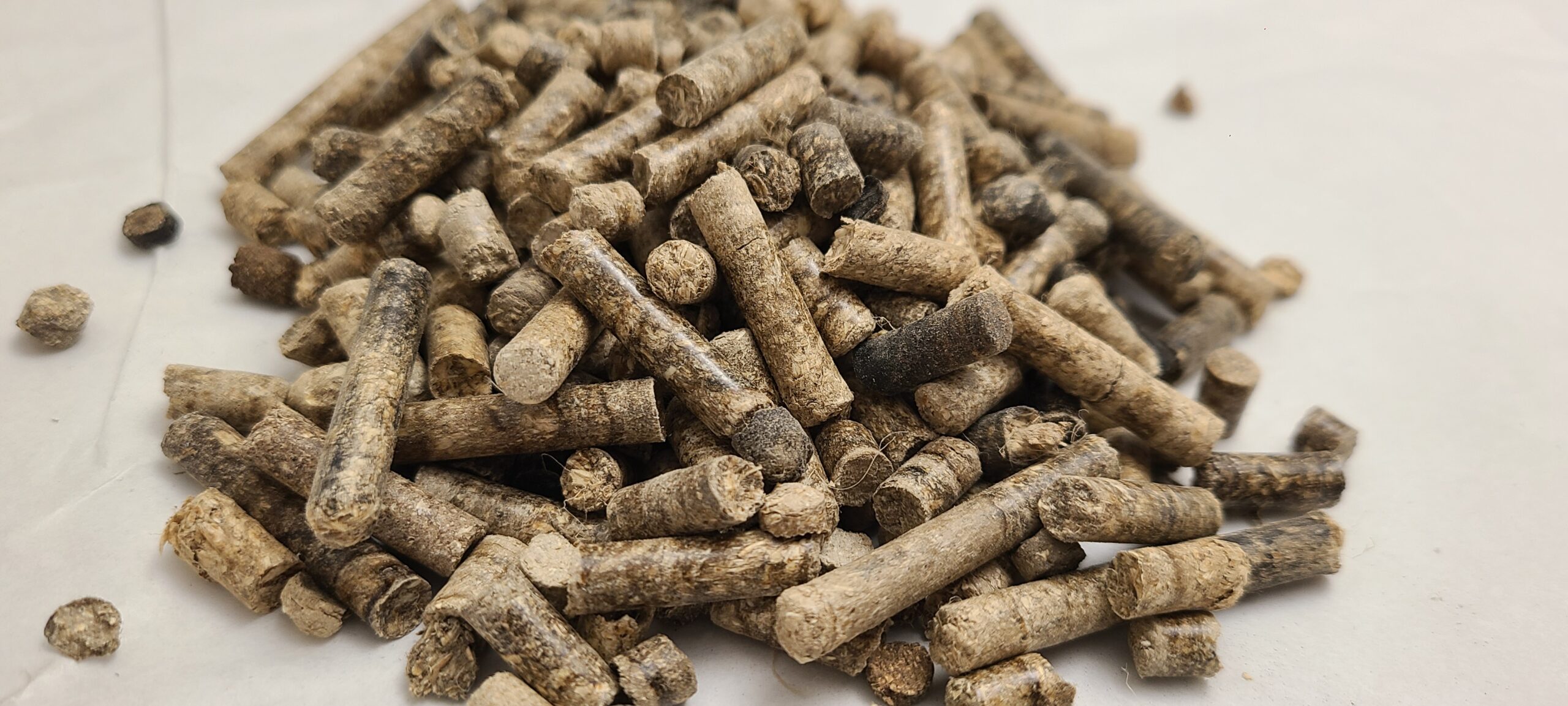
Producing wood pellets and biomass fuel starts well before the material reaches the pellet mill. Feedstock preparation, particularly grinding, helps establish the particle size and consistency needed for subsequent processing.
For biomass producers, selecting the right grinding equipment means balancing throughput, final particle size, material characteristics, and the requirements of downstream equipment.
Why Fine Grinding Matters
Wood residues vary widely. Sawdust, wood chips, bark, and other byproducts can differ in size, moisture content, density, and composition. These variations influence how the material moves through a grinding system and how it performs in later stages of production.
Fine grinding reduces larger particles into a smaller, more manageable size. Depending on the application, this can help prepare material for conveying, mixing, drying, and pelletizing.
Particle size also influences the behavior of material as it enters a pellet mill. Feedstock that is properly prepared for the process can support more consistent operation, although pellet quality and production rates also depend on moisture, material composition, conditioning, and pellet mill configuration.
Choosing the Right Particle Size
There is no universal particle-size target for every biomass application.
The ideal grind depends on the raw material, the pellet mill, and the specifications of the finished product. Grinding too coarsely may leave particles that are unsuitable for the intended process, while unnecessarily fine grinding can increase energy demand without providing a corresponding benefit.
Screen selection is one of the key variables in hammer mill operation. The screen helps determine the particle size of discharged material, while hammer configuration, rotor speed, feed characteristics, and operating conditions also influence the resulting grind.
The goal is to achieve the required material specification without adding unnecessary processing steps.
Balancing Throughput and Grind Quality
Biomass producers must meet production targets while maintaining the feedstock characteristics required by downstream equipment.
Several factors influence grinding performance:
- Incoming particle size: Larger feedstock may require more reduction before reaching the target specification.
- Moisture content: Wet or fibrous materials will behave differently from dry, brittle materials.
- Screen selection: Screen openings influence the size of discharged particles and can affect capacity.
- Feed consistency: Variations in the incoming material can affect throughput and the uniformity of the finished grind.
- Production requirements: Equipment must be sized for the required capacity and operating conditions.
Evaluating these factors together is more effective than choosing a mill based on horsepower or nominal capacity alone.
Integrating Grinding Into a Biomass Process
Grinding is one part of a larger production system. Material handling, drying, storage, and pelletizing all affect overall performance.
A well-planned system accounts for how feedstock arrives at the mill, how ground material is collected and conveyed, and what specifications the next stage requires. This helps avoid bottlenecks and unnecessary reprocessing.
CSE Bliss provides hammer mill equipment for wood processing and biomass applications, helping producers prepare materials for downstream manufacturing.
Preparing wood feedstock for pellet production? Contact CSE Bliss to discuss your material, required particle size, and throughput goals.